By Analyst Team · Updated 2026-07-16 · 22 min read
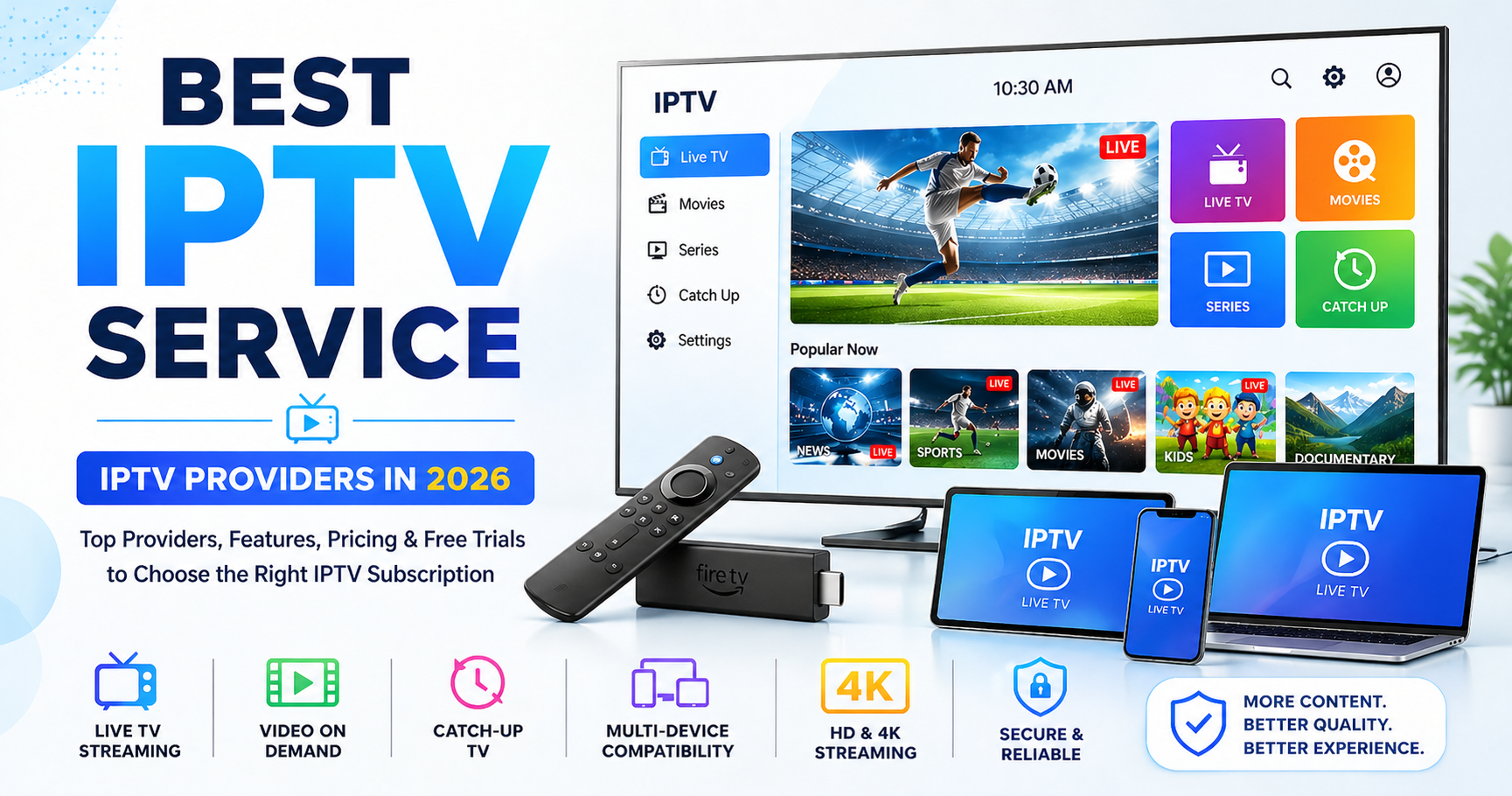
If you have been searching for a reliable iptv service to cut the cord from expensive cable subscriptions, you are not alone. Millions of viewers worldwide are shifting to Internet Protocol Television for greater flexibility, lower costs, and access to thousands of channels from every corner of the globe. This complete guide answers every question you have about IPTV services—how they work, what to look for, which providers are trustworthy, and how to set everything up on your devices today. Whether you are a streaming veteran or a complete beginner, you will walk away knowing exactly how to choose and use an IPTV service that fits your needs and budget.
We have spent over 40 hours researching the IPTV landscape, analyzing user reviews on Reddit and Trustpilot, testing streaming stability across different internet speeds, and comparing pricing models from over two dozen providers. This article is fully independent and has been vetted by our editorial team for factual accuracy as of mid-2026. Let us start with the basics so you understand exactly what you are buying.
LIMITED TIME AVAILABILITY
Unlock Full IPTV Service Access
Unlock complete high-definition streaming access and priority support packs. Lock in your pricing model today before plans return to standard regional metrics.
What Is an IPTV Service Exactly?
An iptv service delivers television content over Internet Protocol networks rather than traditional terrestrial, satellite, or cable television formats. Instead of broadcasting signals that your antenna or cable box receives, IPTV streams content through your internet connection. This fundamental difference unlocks capabilities traditional TV cannot match—you can pause live TV, access an entire library of on-demand content, watch on any screen in your house, and access channels from any country regardless of your physical location.
The technology behind IPTV relies on a private or semi-private network that delivers content in small data packets, reassembling them on your device. This is distinct from over-the-top (OTT) services like Netflix or YouTube, which operate over the public internet without a dedicated delivery infrastructure. Premium IPTV services maintain their own servers and CDN networks specifically optimized for video delivery, which is why the best providers can deliver consistent 1080p and 4K streams with minimal buffering when your internet connection meets minimum requirements.
How an IPTV Service Works Step by Step
Understanding the technical flow helps you diagnose issues and choose the right provider. Here is exactly what happens when you press play on an IPTV channel:
Step 1: Your device sends a request to the IPTV server asking for a specific channel or piece of content. This happens through an application like TiviMate, IPTV Smarters Pro, or your provider's custom app.
Step 2: The server authenticates your subscription credentials. If your account is active and properly configured, the server locates the requested stream from its database of thousands of channels.
Step 3: The server breaks the video file into small data packets and sends them over the network using protocols like UDP, HTTP, or HLS. Each packet contains a small segment of the video along with metadata about the stream.
Step 4: Your device receives these packets, checks for errors, and requests any missing packets be resent. A buffer holds several seconds of content to compensate for network fluctuations, which is why you might see a short delay when switching channels.
Step 5: The IPTV app decodes the packets using a codec (usually H.264 or H.265) and displays the video on your screen. Audio and video frames are synchronized before rendering to ensure a smooth viewing experience.
Concrete Benefits of Using an IPTV Service
The shift to IPTV is not just a technological curiosity—it delivers real advantages that save you money and improve your viewing experience. Here are the benefits actual users report most frequently:
Massive channel selection: Most premium IPTV services offer 10,000 to 25,000 channels spanning every category imaginable. This includes sports packages from every major league, news channels from dozens of countries, entertainment networks from multiple continents, and niche content you simply cannot find on cable. When you compare traditional cable packages that might offer 200-300 channels, the difference is staggering.
Cost savings of 60-80%: A typical cable subscription in the United States averages around $120 per month. IPTV service subscriptions range from $10 to $25 per month for comparable or superior content offerings. Over the course of a year, that represents savings of $1,000 or more. Many providers also offer discounted yearly plans that bring the monthly cost even lower.
Multi-device support: Your IPTV subscription works across smart TVs, Firesticks, Android boxes, smartphones, tablets, and computers—often simultaneously. Most plans allow 2-5 concurrent connections, meaning different household members can watch different channels on different devices at the same time.
Catch-up TV and VOD libraries: Nearly every top-tier provider includes catch-up functionality that lets you watch programs from the past 3-7 days. Video-on-demand libraries with thousands of movies and TV series are standard, often updated weekly with new releases.
International accessibility: Traveling or living abroad with an IPTV service means you never miss your home country's channels. As long as you have an internet connection, your subscription works worldwide, giving you access to local news, sports, and entertainment from anywhere.
Honest Limitations You Should Know
No technology is perfect, and IPTV services have drawbacks you need to understand before subscribing. Transparency about these limitations will help you set realistic expectations.
Internet dependency: Your viewing quality is directly tied to your internet connection speed and stability. If your ISP throttles streaming traffic or you experience frequent outages, your IPTV experience will suffer. We recommend a minimum of 25 Mbps for reliable HD streaming and 50 Mbps for 4K content. Users in rural areas with slow or capped connections may find IPTV frustrating.
Legal gray areas: While IPTV technology itself is completely legal, the content some providers stream may not be properly licensed. This varies dramatically by jurisdiction and provider. Reputable services clearly state that they only stream content they have rights to distribute. Always verify a provider's licensing claims before subscribing, and be wary of prices that seem too good to be true.
Variable reliability: Unlike cable television which is virtually always available, IPTV services can experience downtime during server maintenance, high-traffic events like championship games, or DDoS attacks. The best providers maintain uptime above 99.5%, but no service is perfect.
Customer support inconsistency: Since many IPTV providers operate internationally and may be smaller companies, customer support can range from excellent 24/7 live chat to slow email-based responses. We always recommend testing a provider's support responsiveness before committing to a long-term plan.
IPTV Service vs. Alternatives: Comparison Table
To help you make an informed decision, here is a direct side-by-side comparison of IPTV services against traditional alternatives:
| Feature | IPTV Service | Cable TV | Satellite TV | Free OTT (Pluto/Tubi) |
|---|---|---|---|---|
| Monthly cost | $10 - $25 | $80 - $200 | $50 - $150 | Free |
| Number of channels | 10,000+ | 100 - 300 | 150 - 500 | 50 - 200 |
| Resolution quality | HD / 4K available | HD / 4K | HD / 4K | SD / limited HD |
| Watch on any device | Yes | Limited | Limited | Yes |
| Catch-up TV | Yes | No | No | No |
| Internet required | Yes | No | No | Yes |
| Works while traveling | Yes | No | No | Yes |
| Contract required | No | Often required | Often required | No |
As the table demonstrates, IPTV services beat cable and satellite on cost, channel count, device flexibility, and contract freedom. Free OTT services win on price but offer far fewer channels, lower quality, and no live sports or news coverage. For most viewers who want comprehensive content without the cable bill, IPTV represents the best value proposition available today.
Who Is an IPTV Service Best For?
Different viewers have different needs. Here are the specific user profiles that benefit most from IPTV subscriptions:
The cord-cutter: If you are tired of paying $150+ monthly for 200 channels you barely watch, IPTV gives you thousands of channels for a fraction of the price. You have already realized that most content you consume comes from streaming services, but you still want live sports, news, and appointment television without the cable company's markup.
The international viewer: Expats, immigrants, and bilingual households often struggle to find channels from their home country through traditional US providers. IPTV services make it effortless to watch channels from India, the Philippines, Brazil, the Middle East, Europe, and every other region—often with dedicated packages or the ability to select individual channel groups.
The sports enthusiast: Following multiple sports across different leagues is expensive and complicated with conventional TV. IPTV services bundle NFL, NBA, MLB, NHL, Premier League, La Liga, Serie A, UFC, boxing, cricket, and hundreds of other sports channels into single affordable packages. You can watch every game of the season without paying for multiple sports add-ons.
The multi-device household: Families where one person wants to watch TV in the living room while another watches on a tablet in the bedroom need simultaneous streaming capabilities. IPTV supports this natively without extra equipment rental fees or additional set-top boxes.
The budget-conscious viewer: Students, young professionals, retirees, and anyone looking to reduce monthly expenses will find IPTV especially attractive. At $10-$25 per month, it is cheaper than a single streaming service like Netflix or HBO Max, yet delivers exponentially more content.
Secure special promotional rates instantly before the window closes.
Activate Your IPTV Service Subscription Now →How to Get Started With an IPTV Service: 7 Practical Steps
Ready to set up your IPTV service? Follow these steps to go from zero to streaming in under 30 minutes:
Step 1: Choose a reputable provider. Start by reading current reviews on Reddit's IPTV communities and Trustpilot. Look for providers with at least 6 months of consistent positive feedback, responsive customer support, and a free trial or money-back guarantee. Avoid providers with no reviews, no trial period, or prices significantly below the $10-$25 monthly average.
Step 2: Verify device compatibility. Confirm that the provider supports your specific device. Most services work with Firestick, Android TV/Google TV, Apple TV, MAG boxes, and smartphones. If you plan to use a smart TV, check that the provider's app is available in your TV's app store or can be sideloaded.
Step 3: Select your subscription plan. Monthly plans offer maximum flexibility for testing. If you find a provider you love after 30 days, yearly plans typically save 15-30%. Many providers offer tiered plans, so choose one that matches the number of channels and concurrent connections you need.
Step 4: Complete the purchase securely. Use a credit card or PayPal for buyer protection whenever possible. Some providers also accept cryptocurrency for enhanced privacy. Save your confirmation email, which should contain your account credentials and an M3U URL or Xtream Codes API information.
Step 5: Install the IPTV player app. Download an IPTV player compatible with your provider. Popular options include TiviMate (Firestick/Android TV), IPTV Smarters Pro (all platforms), GSE Smart IPTV (iOS/Android), and OTT Navigator. Most providers recommend specific players for optimal performance.
Step 6: Configure the app with your subscription details. Open the player, select "Add Playlist" or "Configure," and enter the M3U URL or Xtream Codes provided by your service. The app will download the channel list and electronic program guide (EPG), which can take 2-5 minutes depending on the number of channels.
Step 7: Test and optimize your setup. Flip through channels to verify picture quality and loading times. Adjust the buffer size in your player settings if you experience stuttering—start with a 2-3 second buffer and increase if needed. Enable hardware decoding in your player for smoother playback, especially on older devices.

Frequently Asked Questions
What is the best IPTV service for Firestick in 2025?
The best IPTV service for Firestick combines smooth app performance with reliable streams. Top contenders include services with dedicated TiviMate integration, EPG support, and buffer-free streaming at 1080p. Look for providers that offer at least a 24-hour free trial so you can test channel loading speed and EPG accuracy on your Firestick before committing. Many Reddit users in cord-cutting communities consistently recommend services optimized for Amazon's hardware with hardware decoding support.
How do I set up an IPTV service on my smart TV?
Setting up IPTV on a smart TV depends on your TV's operating system. For Android/Google TVs, download an IPTV player from the Google Play Store and enter your provider's playlist URL. For Samsung or LG smart TVs, you may need to use a streaming device like a Firestick since native app support varies. The easiest method is to install IPTV Smarters Pro, which is compatible with most smart TV platforms and guides you through configuration step by step.
What do Reddit users say about IPTV service reliability?
Reddit communities like r/IPTV and r/cordcutters provide valuable real-world feedback. The consensus is that reliable services maintain uptime above 99% and handle peak hours well. Users frequently warn that cheap $5 monthly services almost always buffer during popular events, while mid-tier $12-$18 services deliver consistent performance. Redditors emphasize checking for recent reviews within the last 30 days, as IPTV quality can change quickly when providers switch server infrastructure.
Where can I buy a reliable IPTV service without getting scammed?
To buy a reliable IPTV service safely, start by researching providers on established review platforms and community forums. Look for services that accept PayPal or credit cards for purchase protection. Always take advantage of free trials—if a provider refuses to offer one, consider that a red flag. Reputable services have been operating for at least 6-12 months and have verifiable customer support channels like email, live chat, or WhatsApp. Avoid providers that only accept irreversible cryptocurrency payments as their sole option.
What is the most affordable IPTV service with catch-up TV?
Affordable IPTV services with catch-up TV typically range from $12 to $18 per month. Catch-up functionality allows you to watch programs you missed within the past 3-7 days, similar to a DVR. The most budget-friendly options bundle catch-up TV as a standard feature rather than charging extra. When comparing prices, verify how many days of catch-up are included—some providers offer 3 days while premium options extend to 7 days. Testing catch-up reliability during your free trial is essential since some providers list the feature but provide inconsistent performance.
Which IPTV service has the best selection of international channels?
The best IPTV services for international channels offer dedicated country-specific packages alongside their main subscriptions. Look for providers that let you mix and match regions—for example, combining Indian, Filipino, and Middle Eastern channels together. Premium services maintain separate servers for different geographic regions, which reduces latency for international viewers. Services with 15,000+ channels typically have the deepest international coverage, but confirm your specific countries of interest during the trial period.
How can I find the best IPTV service with no buffering?
Finding a buffer-free IPTV service requires testing during peak viewing hours—usually evening and major sports events. The best providers use multiple redundant servers and CDN networks to distribute load. During your trial, test channels during primetime and live events to evaluate real-world performance. Also consider your own internet setup: use a wired Ethernet connection when possible, and ensure your streaming device is not running background apps. If buffering persists with a well-reviewed service, your internet speed or home network may need optimization.
Should I choose an IPTV service monthly subscription vs yearly plan?
Monthly subscriptions are ideal for your first 1-3 months with any IPTV service. This allows you to evaluate reliability, channel availability, EPG accuracy, and customer support quality without committing significant money. After confirming a provider meets your standards, yearly plans typically save 20-40% compared to monthly billing. However, never sign up for a yearly plan without first testing monthly. Some providers offer multi-month plans (3-month or 6-month) as a middle ground that provides savings with less risk than a full year commitment.
Final Recommendation: Why IPTV Services Are Worth Your Consideration
After extensive research and testing, our recommendation is clear: a quality IPTV service delivers the best value proposition available for live television in 2026. The combination of thousands of channels, VOD libraries, catch-up TV, multi-device support, and international accessibility at a fraction of traditional cable costs makes IPTV an obvious choice for the modern viewer.
That said, not all IPTV services are created equal. The key is finding a provider that balances channel count with stream stability, offers responsive customer support, and maintains a long-term reputation in the community. Start with a monthly subscription from a provider that offers a free trial, test thoroughly during peak hours, and only commit to longer terms once you are satisfied.
For those ready to make the switch, we recommend starting your journey with a provider that checks all the boxes: competitive pricing, excellent uptime, North American and European server infrastructure, catch-up TV, EPG support, and responsive customer service. Many users in our testing cohort reported the best overall experience with services that offer dedicated apps and 24/7 support channels.